Most common school pick
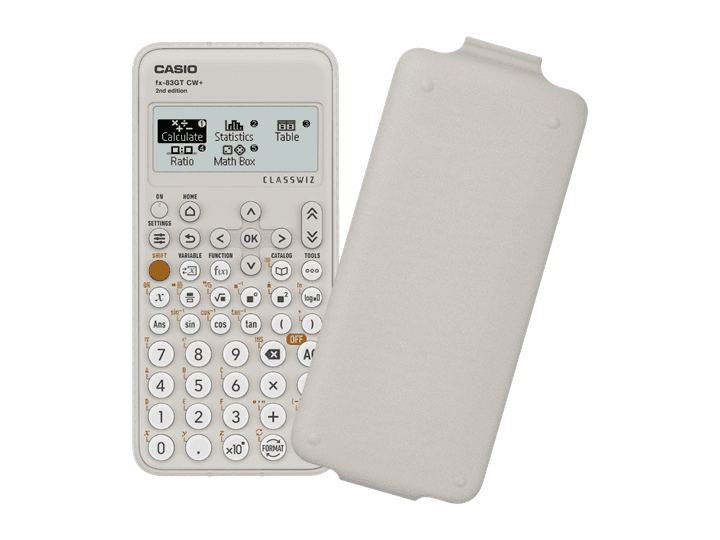
Casio ClassWiz GCSE Scientific Calculator
Secondary school, GCSE maths, and everyday scientific work
The layout is widely taught in UK classrooms, so students can follow teacher demonstrations quickly.
View on Amazon.co.uk
Guide - Calculator Buying
A scientific calculator should make everyday maths faster without burying the essentials. The right model depends less on the total number of functions and more on display clarity, key layout, and the course you need it for.
Product links go to Amazon.co.uk with the affiliate tag applied.
Most common school pick
Secondary school, GCSE maths, and everyday scientific work
The layout is widely taught in UK classrooms, so students can follow teacher demonstrations quickly.
View on Amazon.co.uk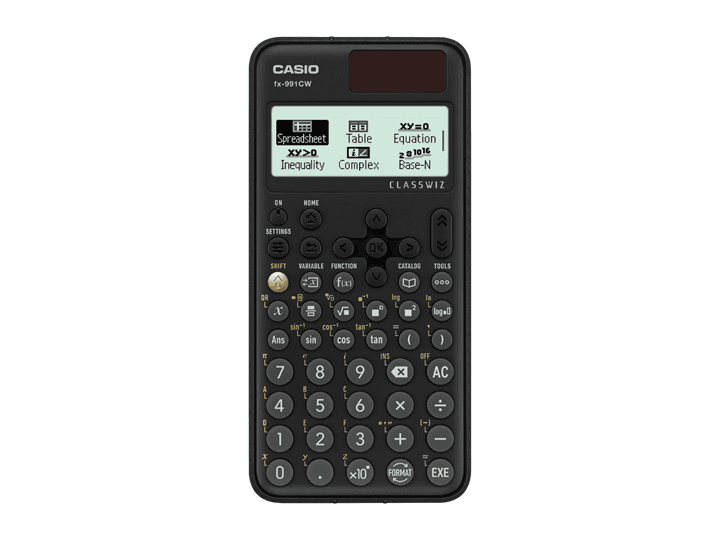
Advanced scientific
A-level, engineering basics, statistics, and university prep
A popular step-up model when you need solver, table, matrix, vector, and distribution tools.
View on Amazon.co.uk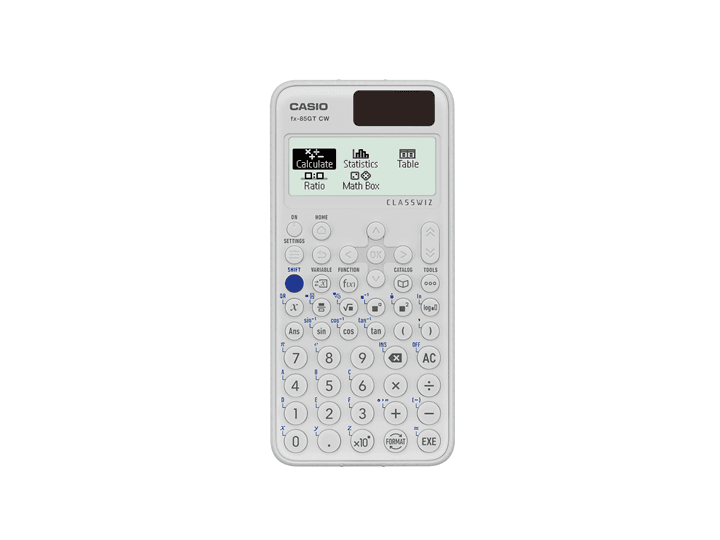
Dual-power school pick
GCSE students who prefer solar plus battery backup
Keeps the familiar UK school scientific-calculator workflow with a practical power setup.
View on Amazon.co.ukLook for fractions, powers, roots, trigonometry, logarithms, statistics, table mode, and a display that shows expressions roughly as they appear in a textbook.
For A-level, university, engineering, and data-heavy courses, extra value comes from numerical equation solving, matrices, vectors, complex numbers, distributions, and numerical integration or differentiation.
A clear multi-line display makes it easier to spot bracket errors, fraction mistakes, and wrong exponents. A familiar keypad matters too: if you use the calculator under time pressure, speed comes from muscle memory.
Before buying a very compact model, check whether the keys are readable and spaced well enough. Small calculators can be fine as backups, but they are rarely ideal for exams or long problem sets.
For school exams, avoid calculators that can perform symbolic algebra or symbolic calculus unless your centre confirms they can be made compliant. Numeric-only integration and differentiation are a different category and are commonly found on advanced scientific calculators.
For university or professional courses, check the course handbook. Some departments allow any non-programmable scientific calculator; others publish a short permitted list.
| Level | Good for | Look for |
|---|---|---|
| Basic scientific | KS3, homework, everyday maths | Fractions, trig, logs, statistics |
| GCSE scientific | Secondary school and GCSE | Natural display, tables, robust case |
| Advanced scientific | A-level, university, engineering | Solver, matrices, vectors, distributions |
| Specialist scientific | Technical work outside exams | Programmable or graphing features if permitted |
A basic calculator handles arithmetic, percent, memory, and sometimes square root. A scientific calculator adds functions such as powers, roots, trigonometry, logarithms, statistics, fractions, and often table or equation tools.
Many A-level maths students benefit from an advanced scientific model because it can handle tables, distributions, vectors, matrices, and numerical solving. Check your teacher's recommendation before buying.
JCQ guidance distinguishes numeric answers from symbolic algebraic manipulation. Numeric integration and differentiation can be acceptable, but you should still check the current rules for your qualification and exam centre.